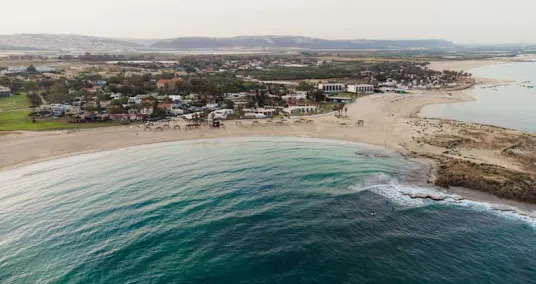
The discovery was made in an ancient shipwreck in the Dor Lagoon near the Carmel Coast, where archaeologists recovered nine pieces of unprocessed iron known as “blooms.”
Researchers from the University of Haifa said Wednesday that an underwater excavation off Israel’s northern Mediterranean coast uncovered what they described as the earliest known cargo of raw iron transported by ship, dating back around 2,600 years, Xinhua reported.
The discovery was made in an ancient shipwreck in the Dor Lagoon near the Carmel Coast, where archaeologists recovered nine pieces of unprocessed iron known as “blooms.” According to the university, the find provides direct evidence of how iron was transported in its earliest commercial stages.
The material was preserved in its original form, having solidified directly in a smelting furnace without undergoing forging or further refinement. Researchers said this distinguishes the cargo from later iron artifacts that typically show signs of shaping or tool-making.
Unlike copper and bronze, which could be melted into liquid form in ancient production processes, iron was heated with charcoal to produce a solid, porous mass. That mass was generally hammered to remove impurities and create denser material suitable for tools and implements.
The recovered blooms showed no indication of that secondary processing stage, suggesting they were transported immediately after production.

Earliest iron shipment discovered in ancient Mediterranean wreck
To determine the age and condition of the cargo, researchers conducted microscopic and chemical analyses.
Radiocarbon dating was also carried out on charred wood embedded in one of the pieces, helping confirm the timeline of the shipment. The findings were published in the journal Heritage Science.
Researchers said the cargo indicates that iron was being moved in raw form from production sites to other locations for further processing, pointing to a level of specialization in ancient manufacturing and trade networks in the Mediterranean.
The University of Haifa said the discovery provides new insight into early iron production and distribution practices in the region.
LATEST POSTS
- 1
 Lucrative Positions in the Advancing Position Market of 2024
 - 2Moving Wedding Objections for Paramount Functions
- 3Former defense minister Gallant vacated home over security threat under Shin Bet direction
- 420-year-old who threatened German train attack remanded in custody
- 5Astronauts welcome arrival of new crewmates | On the International Space Station this week Nov. 24-28, 2025




- Picking the Right Pot for Your Plants: An Aide for Plant Devotees
- As reefs vanish, assisted coral fertilization offers hope in the Dominican Republic
- 5 Superstar Couples That Motivate Relationship Objectives
- Artemis 2 astronauts head for the moon after make-or-break engine burn (video)
- German economic institutes cut forecast in half over Iran war
- Vagus nerve stimulation shows promise as a way to counter Alzheimer’s disease- and age-related memory loss
- Director of Swiss hospital describes the rush to treat the injured from Alpine resort bar fire
- Manual for Big name Work out schedules
- Vote In favor of Your Favored Pet Consideration Administration