When you buy through links on our articles, Future and its syndication partners may earn a commission.

Every December, Earth plows through a dusty lane of debris in space, and the night becomes illuminated by streaks of meteors. This year's Geminids meteor shower peaked around Dec. 13, with generally favorable viewing thanks to a relatively dim moon.
The beauty of the Geminids was captured by astrophotographers worldwide, including well-known astrophotographer Josh Dury.
What is it?
A meteor isn't a "falling star" but instead a piece of space grit, usually no bigger than a grain of sand, hitting the Earth's atmosphere at tens of miles per second and vaporizing in a bright, brief flare.
The point from which the Geminids appear to originate (also called the radiant) sits in the constellation Gemini, near the bright star Castor, which is why the meteor shower is named the Geminids.
Where is it?
This image was taken near the Yucatán Peninsula in Mexico.

Why is it amazing?
According to Dury's instagram post on this image: "The Geminids are strange; unlike most meteor showers, they are not debris from a comet, but rather - an asteroid." The asteroid in question is 3200 Phaethon, which is known to act more like a comet than an asteroid.
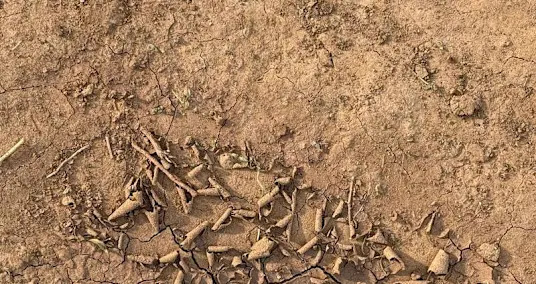
"This narrative of asteroid fragments raining down conjured the image for me of the extinction of the dinosaurs when the Chicxulub asteroid impacted with the Earth," Dury told Space.com. "Utilizing this year's meteor shower over the fossilized dinosaur tracks, I was able to reconstruct the morbid scene that might well have been the final scene before life on earth changed as we know it."
Want to learn more?
You can learn more about meteor showers and astrophotography.
LATEST POSTS
- 1
 Golden satellite insulation sparkles during test | Space photo of the day for Dec. 30, 2025
- 2Heading to Florida for NASA's Artemis 2 moon launch? Here's what to know before you go
- 3Google to Use Natural Gas to Power Massive Data Center in Texas
- 4Consumers advised to dispose of 19 cooking pans due to lead leaching risk, FDA reports
- 5'We were genuinely astonished': This moss survived 9 months outside the International Space Station and could still grow on Earth





- Vote in favor of the Top Vegetable for Senior
- Hunger and makeshift shelters persist in north Caribbean nearly 2 months after Hurricane Melissa
- Senegal president signs tough new anti-LGBT law doubling jail terms
- After harsh winter, Ukrainians find joy in releasing bats rescued from war
- What happened in 'Wicked' part 1 and will there be a 3rd movie? Recap and what Ariana Grande, Jon M. Chu have said about a sequel.
- The pinch at the pump continues on
- Senegal limits foreign trips for officials as the fallout from Iran war deepens
- Weather forecast, Turkana style: A goat's intestines tell it all
- Unraveling the Specialty of Picking Your Ideal Travel Objective