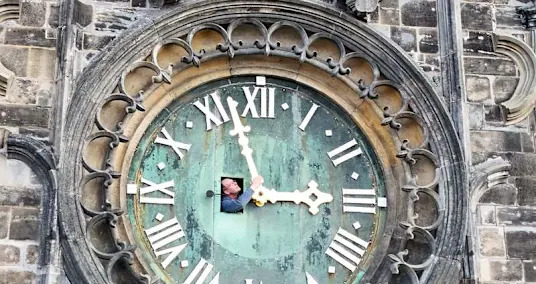
Clocks across the majority of European countries are set to go forward by one hour early on Sunday as the continent moves to daylight saving time, also known as summer time.
Clocks in most European nations including Germany advance by one hour at 2 am (0100 GMT) to 3 am, heralding longer evenings and brighter days.
This means that for the coming months parts of Europe will be on Central European Summer Time (CEST), before moving back to Central European Time (CET) in the autumn, when clocks go back again by an hour on October 25.
The aim of the change is to make better use of daylight in the shorter days of the winter in the northern hemisphere.
The signal for the automatic changeover of the clocks in Germany comes from the Federal Institute of Physics and Metrology (PTB) in the northern city of Braunschweig, also known as Brunswick in English.
The institute's experts ensure that radio-controlled clocks, station clocks and many industrial clocks are supplied with the signal via a long-wave transmitter called DCF77 in Mainflingen near Frankfurt.
LATEST POSTS
- 1
 Iran begins cloud seeding to induce rain amid historic drought
 - 2New movies to watch this weekend: See 'Predator: Badlands' in theaters, rent 'Black Phone 2,' stream Guillermo del Toro's 'Frankenstein' on Netflix
- 3The Main 10 Natural life Protection Associations
- 4China and Pakistan issue five-point peace plan for Middle East
- 5Toyota Motor Europe to roll out smart EV charging through new partnerships




- Israel says Iran's military industry will be destroyed 'within days'
- The most effective method to Pick the Right Material Organization: Your Definitive Aide
- Europe picks companies to help build Argonaut moon lander
- Progress Over Perfection: Lessons From Garment Factories Fighting Heat Stress
- Picking the Right Home Machines: A Commonsense Aide
- Vote in favor of Your Number one Cake Type
- Atorvastatin recall may affect hundreds of thousands of patients – and reflects FDA’s troubles inspecting medicines manufactured overseas
- Avoid Large Crowds In Bali & Swim At This Peaceful Waterfall With A Gorgeous, Natural Pool
- Pocket-Accommodating Jeep Wrangler Buying Guide for Seniors