UNITED NATIONS (AP) — The treason trial of South Sudan’s suspended vice president is further eroding a 2018 peace agreement he signed with President Salva Kiir, U.N. experts warned in a new report.
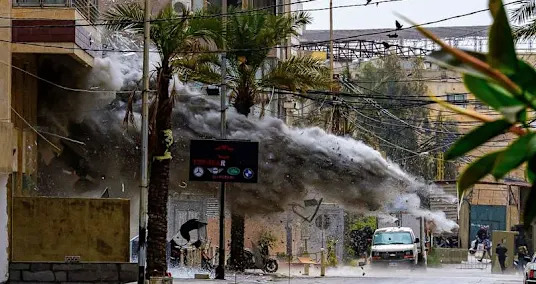
As Riek Machar’s trial is taking place in the capital, Juba, the experts said forces from both sides are continuing to confront each other across much of the country and there is a threat of renewed major conflict.
U.N. peacekeeping chief Jean-Pierre Lacroix told the U.N. Security Council last month that the crisis in South Sudan is escalating, “a breaking point” has become visible, and time is running “dangerously short” to bring the peace process back on track.
There were high hopes when oil-rich South Sudan gained independence from Sudan in 2011 after a long conflict, but the country slid into a civil war in December 2013 largely based on ethnic divisions, when forces loyal to Kiir, an ethnic Dinka, battled those loyal to Machar, an ethnic Nuer.
More than 400,000 people were killed in the war, which ended with the 2018 peace agreement that brought Kiir and Machar together in a government of national unity. But implementation has been slow, and a long-delayed presidential election is now scheduled for December 2026.
The panel of U.N. experts stressed in a report this week that the political and security landscape in South Sudan looks very different today than it did in 2018 and that “the conflict that now threatens looks much different to those that came before.”
“Years of neglect have fragmented government and opposition forces alike,” the experts said, “resulting in a patchwork of uniformed soldiers, defectors and armed community defense groups that are increasingly preoccupied by local struggles and often unenthused by the prospect of a national confrontation. ”
With limited supplies and low morale, South Sudan’s military has relied increasingly on aerial bombings that are “relatively indiscriminate” to disrupt the opposition, the experts said.
In a major escalation of tensions in March, a Nuer militia seized an army garrison. Kiir’s government responded, charging Machar and seven other opposition figures with treason, murder, terrorism and other crimes.
The U.N. experts said Kiir and his allies insist that, despite having dismissed Machar, implementation of the peace agreement is unaffected, pointing to a faction of the opposition led by Stephen Par Kuol that is still engaged in the peace process.
Those who refused to join Kuol and sided with Machar’s former deputy, Natheniel Oyet, “have largely been removed from their positions, forcing many to flee the country,” the experts said in the report.
The African Union, regional countries and the Intergovernmental Authority on Development, or IGAD, have all called for Machar’s release and stressed their strong support for implementation of the 2018 agreement, the panel said.
According to the latest international assessment, 7.7 million people — 57% of the population — face “crisis” levels of food insecurity, with pockets of famine in some communities most affected by renewed fighting, the panel said.
LATEST POSTS
- 1
 Great DSLR Cameras for Photography Devotees
 - 2Tributes pour in for James Ransone, 'The Wire' actor who died at 46
- 3Baby takes 1st steps after receiving groundbreaking gene-edited therapy
- 4I watched the buzzy new AI documentary — and left feeling both hopeful and terrified
- 515 Preposterous Cosplay Ensembles That Will Blow You Away



- Israel and Lebanon's Hezbollah continue to trade attacks
- People who talk with their hands seem more clear and persuasive – new research
- From Exemplary to Current: Famous Rings Available
- Creativity Revealed: A Survey of \Making Shocking Looks\ Cosmetics Item
- Flu season is ramping up, and some experts are "pretty worried"
- How stripping diversity, equity and inclusion from health care may make Americans sicker
- Rick Steves' Newest Guidebook Is A Fresh Perspective On Italy Spilling The Country's Secrets
- A definitive Manual for Picking Electric Vehicle: Decision in favor of Your Number one
- The Best Competitors of the 21st Hundred years